Connecticut Lawn Fertilization Schedule by Season
The 4–5 step Connecticut fertilization year for Zone 6b lawns — pre-emergent, summer feed, fall feed, lime, winterizer. Timing windows included.
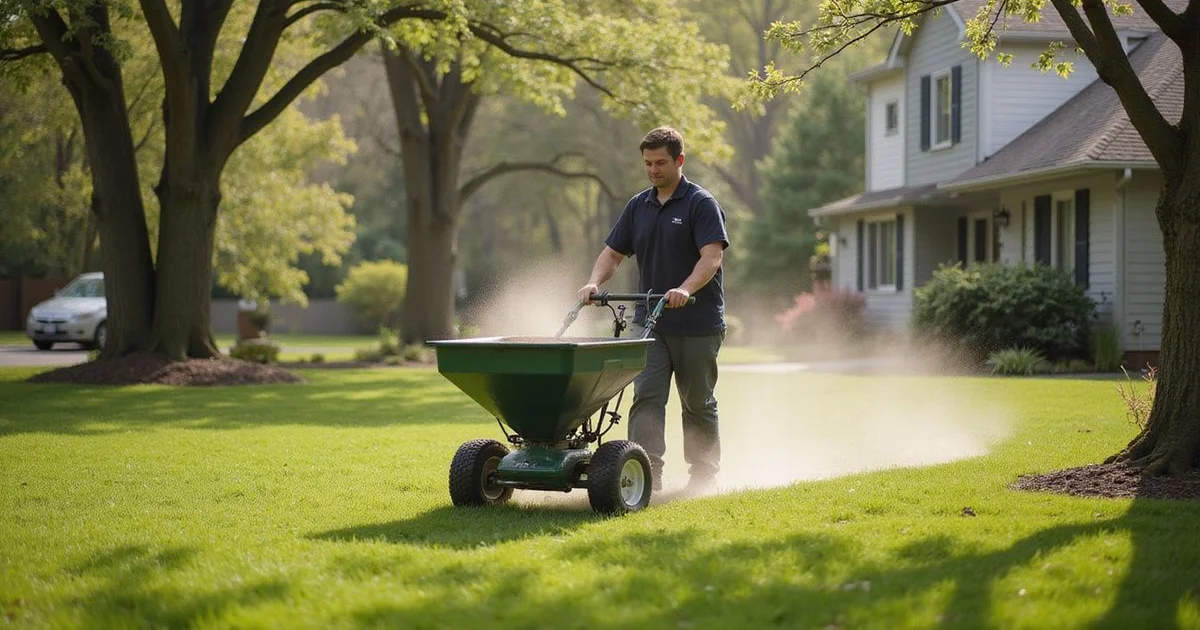
We have watched countless yards struggle simply because treatments hit the soil at the wrong time. A successful lawn fertilization schedule connecticut property owners rely on must adapt to rapid regional weather shifts.
A rigid calendar proves less effective than paying attention to actual soil temperatures. Our team focuses heavily on adapting to Zone 6b conditions and clay-heavy soils.
Let us look at the data, what it actually tells us, and explore a few practical ways to respond.
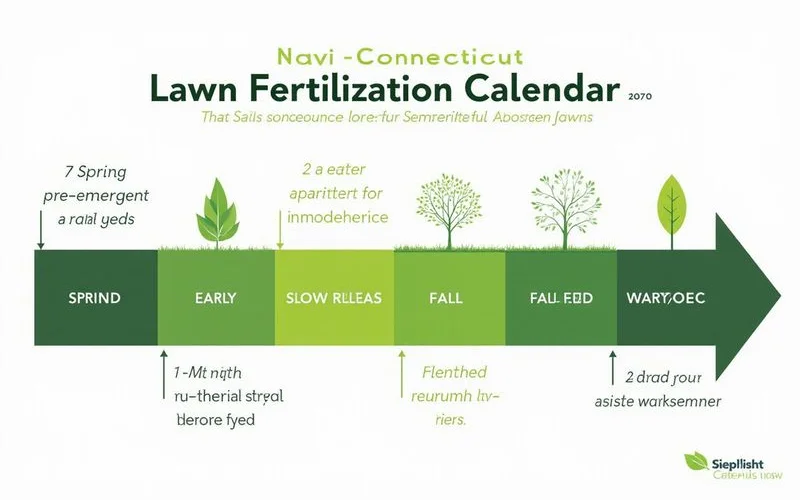
Step 1: Spring Pre-Emergent + Early Feed (Late March to Mid-April)
We recommend applying pre-emergent herbicide and an early-season feed when soil temperatures hit 55 degrees Fahrenheit. This single application stops crabgrass and other annual weeds before they sprout. The ideal application window arrives right before local forsythia bushes reach full bloom.
Our crews track these neighborhood blooms closely to time the application perfectly. Once the forsythia turns fully yellow, you have a tight two-week window before crabgrass germinates.
We rely on active ingredients like prodiamine for dependable early spring defense. This specific chemical provides three to four months of reliable weed control in the soil. Applying it too early allows the protective barrier to wash out during heavy spring rains.
| Pre-Emergent Option | Best Application Time | Key Benefit |
|---|---|---|
| Prodiamine (Barricade) | Early Spring (March) | Longest residual control in the soil |
| Dithiopyr (Dimension) | Mid-Spring (April) | Can kill young crabgrass post-emergence |
Our protocol includes sending a soil sample to the UConn Soil Nutrient Analysis Laboratory in Storrs. A basic soil test costs around $16 in 2026. The resulting data reveals exactly what your clay-heavy soil needs before the growing season begins.
Step 2: Late Spring Feed (Mid-May to Early June)
We apply a second round of slow-release nitrogen to extend the spring growth flush. Adding this step to your lawn feeding schedule supports the grass through the transition into summer. Fast nitrogen pushes too much top growth and leaves the turf exhausted by July.
Our preferred method completely avoids quick-release fertilizers in Hartford County. Taller grass shades the soil and naturally blocks new broadleaf weeds from establishing. We advise keeping mower blades elevated to 3.5 or 4 inches during this late spring period.
Pro Tip: Keep mower blades sharp during the late spring flush. A clean cut heals faster and prevents moisture loss during the transition to summer heat.
Persistent weeds like dandelion, clover, and plantain often escape the initial pre-emergent barrier. Spot-spraying directly treats these invaders without blanketing the entire yard in chemicals. Our technicians spot-treat these broadleaf weeds for environmental and family safety reasons.
If grassy weeds emerge, a targeted post-emergent approach works best.
- Wait until the crabgrass has two to four leaves before applying product.
- Spray a post-emergent containing quinclorac, such as Drive XLR8.
- Mix a surfactant into the liquid to ensure it coats the leaves effectively.
Step 3: Summer Slow-Release (Late June to Early July)
We use a highly controlled-release nitrogen formula to carry the lawn through July and August. Fast nitrogen applied during summer heat will severely damage cool-season grass.
Recent data shows that grass roots actually shed during the summer heat as a natural survival mechanism. Our observation proves that pushing unnatural top growth right now forces the plant to deplete its energy reserves.
Summer Lawn Care Warning: Pushing cool-season grass to grow during peak summer heat causes long-term root damage. Allow the lawn to naturally slow its growth.
Summer browning is often just natural dormancy, not a sign of starvation. We skip this application entirely for many lawns if they receive light irrigation and have good organic matter.
Proper hydration matters far more than fertilizer during a July heatwave. Giving the turf too much water encourages shallow root growth and fungal issues. Our watering guidelines recommend providing exactly 1 to 1.5 inches of water per week, preferably in the early morning.
Step 4: Fall Feed + Lime (Early to Mid-September)
We consider the early September feeding the most critical nutrient application of the entire year. This treatment promotes deep root development that sustains the grass through winter dormancy. A well-fed fall lawn greens up much earlier and thicker the following spring.
Our standard program includes a lime application to correct high acidity. Hartford County clay soils typically run acidic, with a pH resting between 5.8 and 6.2. We aim to push that pH level closer to the ideal 6.5 to 7.0 range for cool-season turf.
Late August through September provides the perfect soil temperatures for new seed germination. The cooler air and warm soil create an environment with very minimal weed competition. Our fall schedule incorporates core aeration and overseeding to thicken the existing turf canopy.
Adjusting Nutrients for Connecticut Regulations
We strictly follow state guidelines regarding phosphorus applications. Connecticut limits the use of phosphorus on established lawns to protect local waterways from toxic runoff. High phosphorus levels in storm drains lead directly to algae blooms in nearby rivers.
Our maintenance fertilizers feature a zero as the middle number in the N-P-K ratio, such as a 5-0-10 blend. You should only apply a starter fertilizer containing phosphorus if you are actively seeding a new lawn area.
Step 5: Winterizer (Late October to Early November)
We finish the season with a high-potassium winterizer formulation. This final application hardens the lawn off and prepares it for the coming winter dormancy.
- Protects the grass crown from deep freezes.
- Strengthens the cell walls against winter traffic.
- Reduces the chance of snow mold developing in the spring.
Sudden bursts of nitrogen push fragile new growth that gets destroyed by hard frosts. Our crews completely avoid high-nitrogen products during the late fall months.
The extra potassium helps grass survive freezing temperatures and resist destructive snow mold. We focus heavily on potassium because it acts like antifreeze for the plant cells.
Letting thick layers of leaves sit on the turf blocks sunlight. This dark, damp environment encourages devastating fungal diseases to spread under the snow. Our pre-winter checklist includes aggressive leaf removal to keep the grass crown dry and healthy.
Putting It All Together: Your Lawn Fertilization Schedule Connecticut
We build the standard program around four to five strategic applications. Local weather patterns and specific turf needs dictate the exact timing of each visit.
Consistent intervals and weather adjustments keep the grass growing steadily without nutrient spikes. Our team coordinates the fertilization with your recurring weekly mowing schedule to maximize nutrient absorption.
Success Check: The best fertilizer program always adapts to the weekly weather forecast.
You can choose organic, synthetic, or hybrid options based entirely on your personal priorities. We designed the Newington Landscaping Pros fertilization program specifically as a ct fertilization program for the challenges of Zone 6b.
A well-maintained lawn requires consistent attention throughout the entire calendar year.
Here is how you can start preparing right now:
- Schedule your basic soil test in early March.
- Confirm your weekly mowing height and schedule.
- Contact us today to secure your spot for the first spring application.
Our goal is to give you a resilient, healthy yard that handles every season beautifully.
Related Service
Learn more about Lawn Fertilization & Weed Control
Ready to book? Get a free written estimate for lawn fertilization & weed control from our Hartford County team.
Visit the Lawn Fertilization & Weed Control Page